Have you played...? Tunic
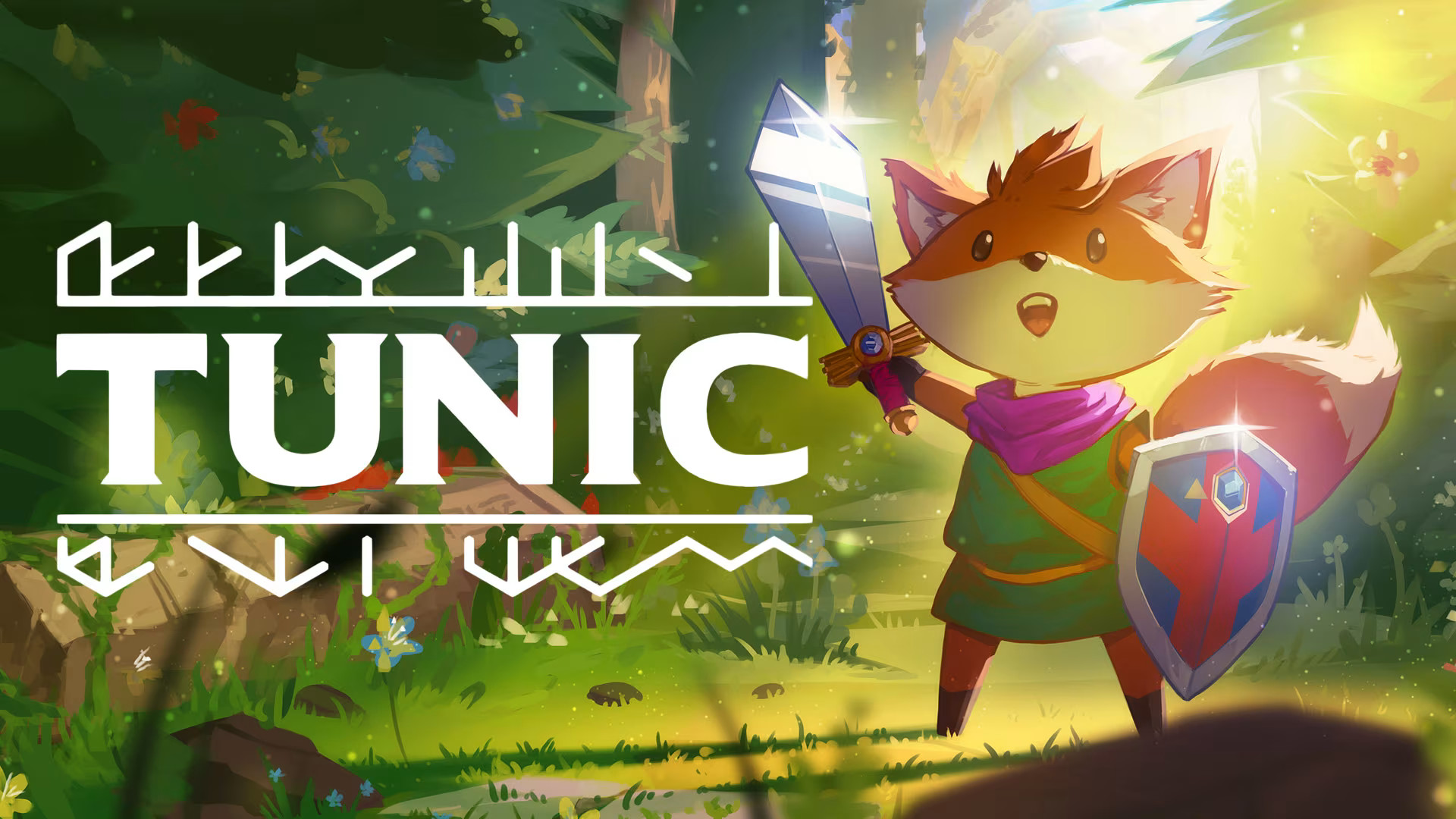
I love playing video games (you probably already knew that). I enjoy how they can be fun, challenging, and rewarding experiences. Some of them have touching stories that make me cry, and some are gorgeous to watch and hear. Others expose me to different cultures that broaden my worldview and connect me with humanity. And from time to time, I play a game that expands the boundaries of what a game experience can be, one that transforms and lingers with you for a long time. Tunic is one of those wonderful gems.
At first glance, Tunic appears to be simply an homage to the golden age of 8-bit games, especially the original Legend of Zelda for the NES. We are a cute little fox in a green tunic (a clear throwback to Link) who wakes up on a beach, with no weapons, items, or even a hint of a story. All we can do is explore. It’s dangerous to go alone, so you should find a weapon first. The game captures the wonder of exploring a brand-new world so well that it really reminded me of what it was like exploring a world in an old video game.
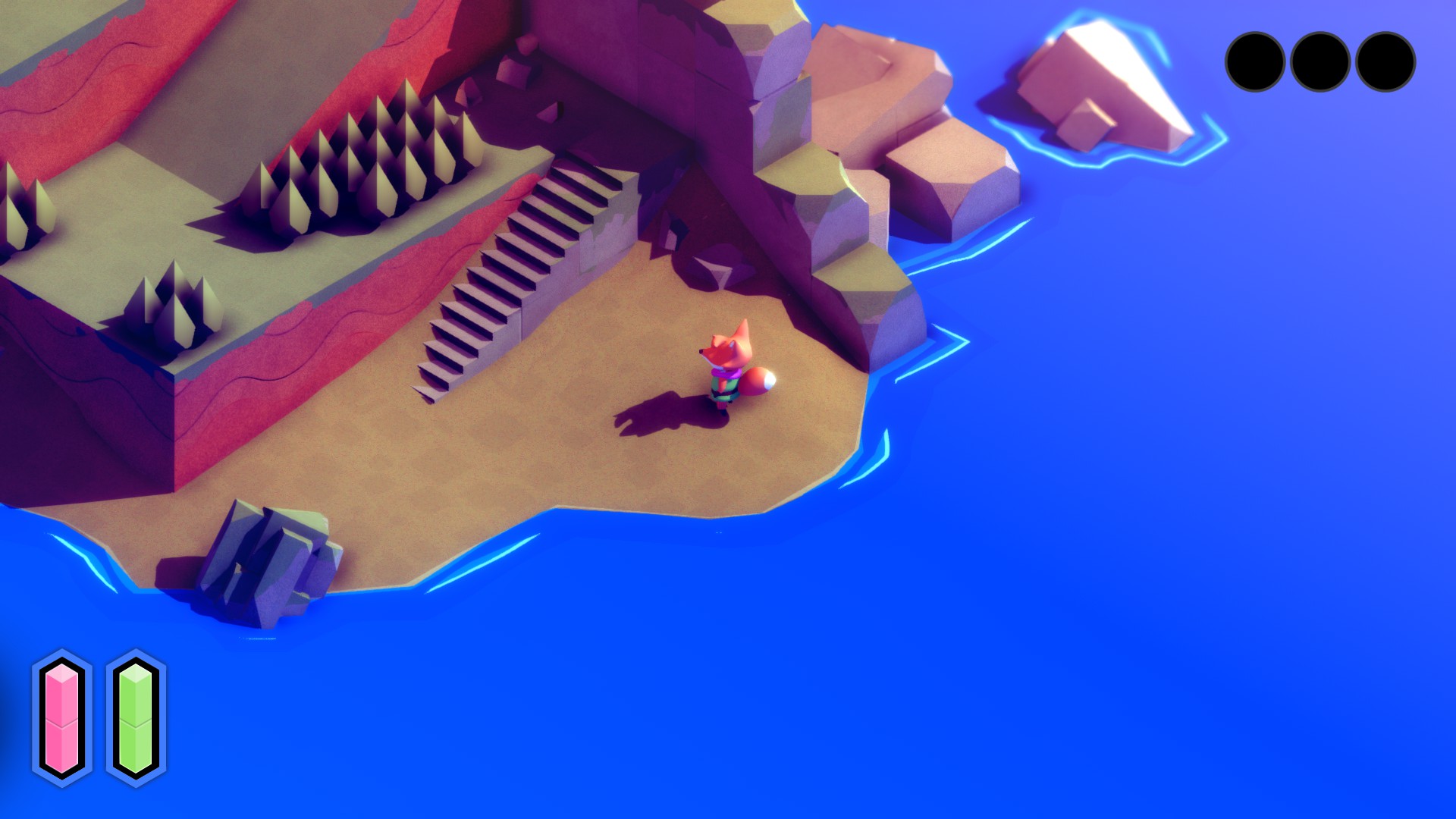
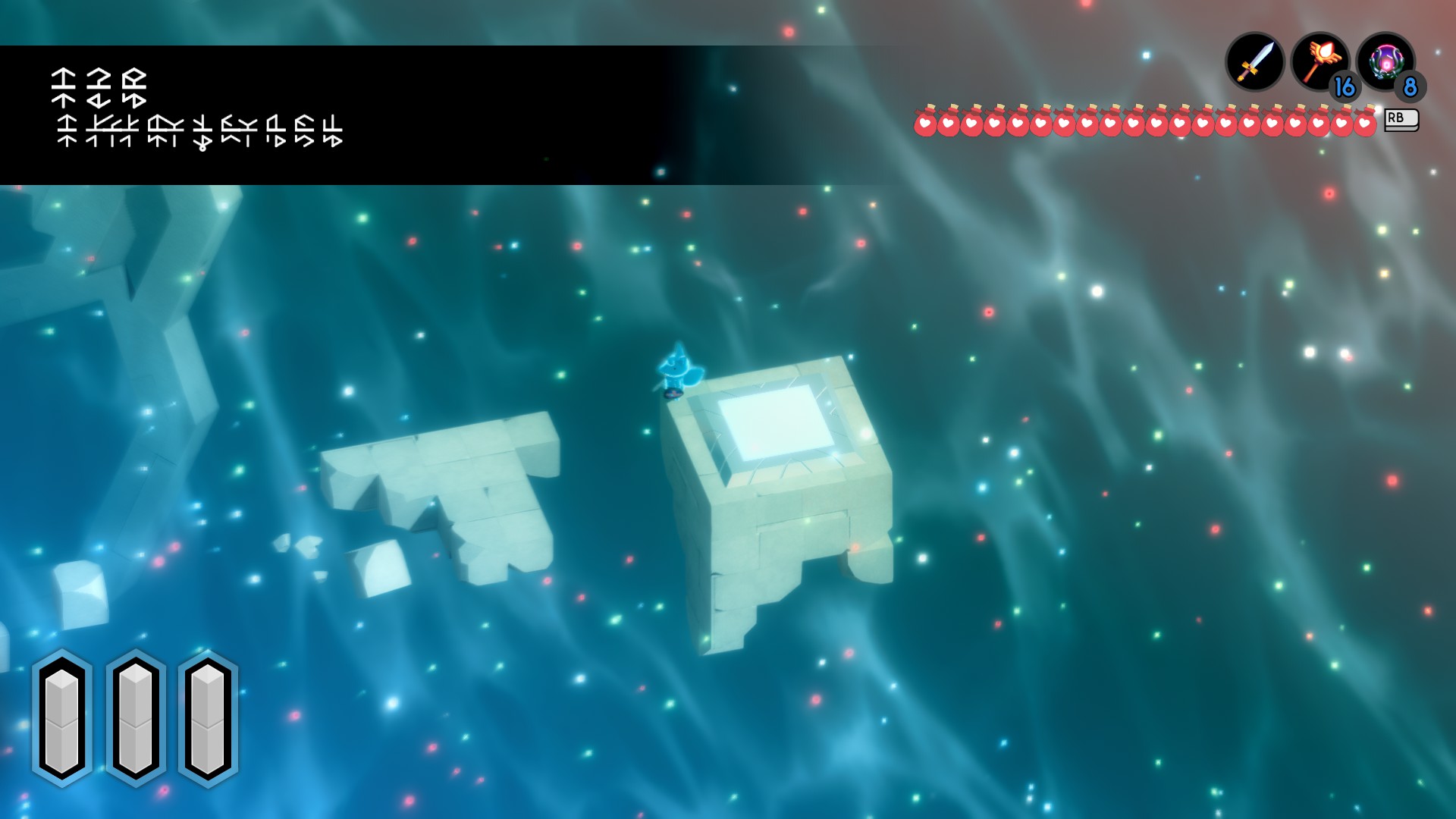
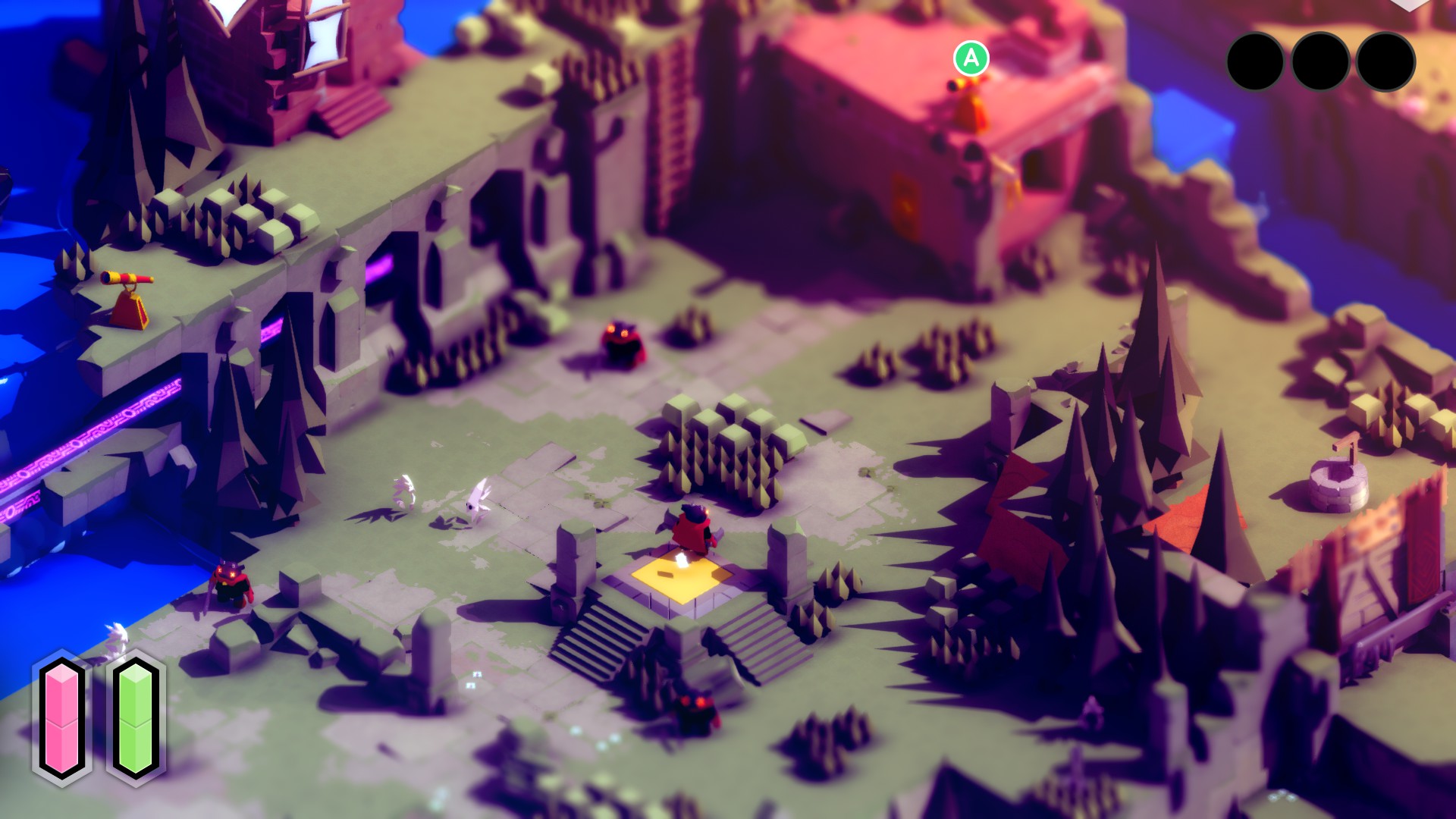
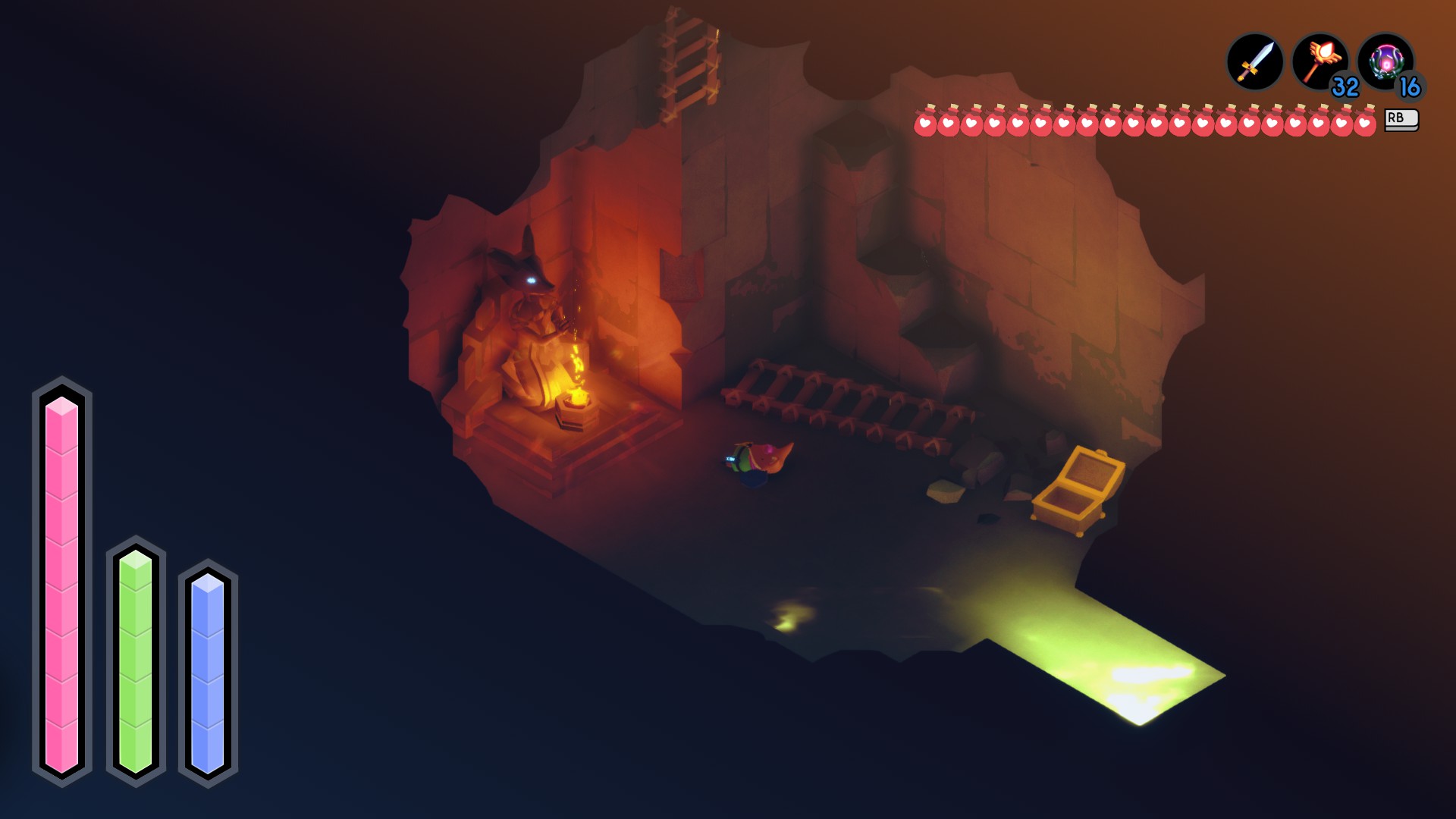
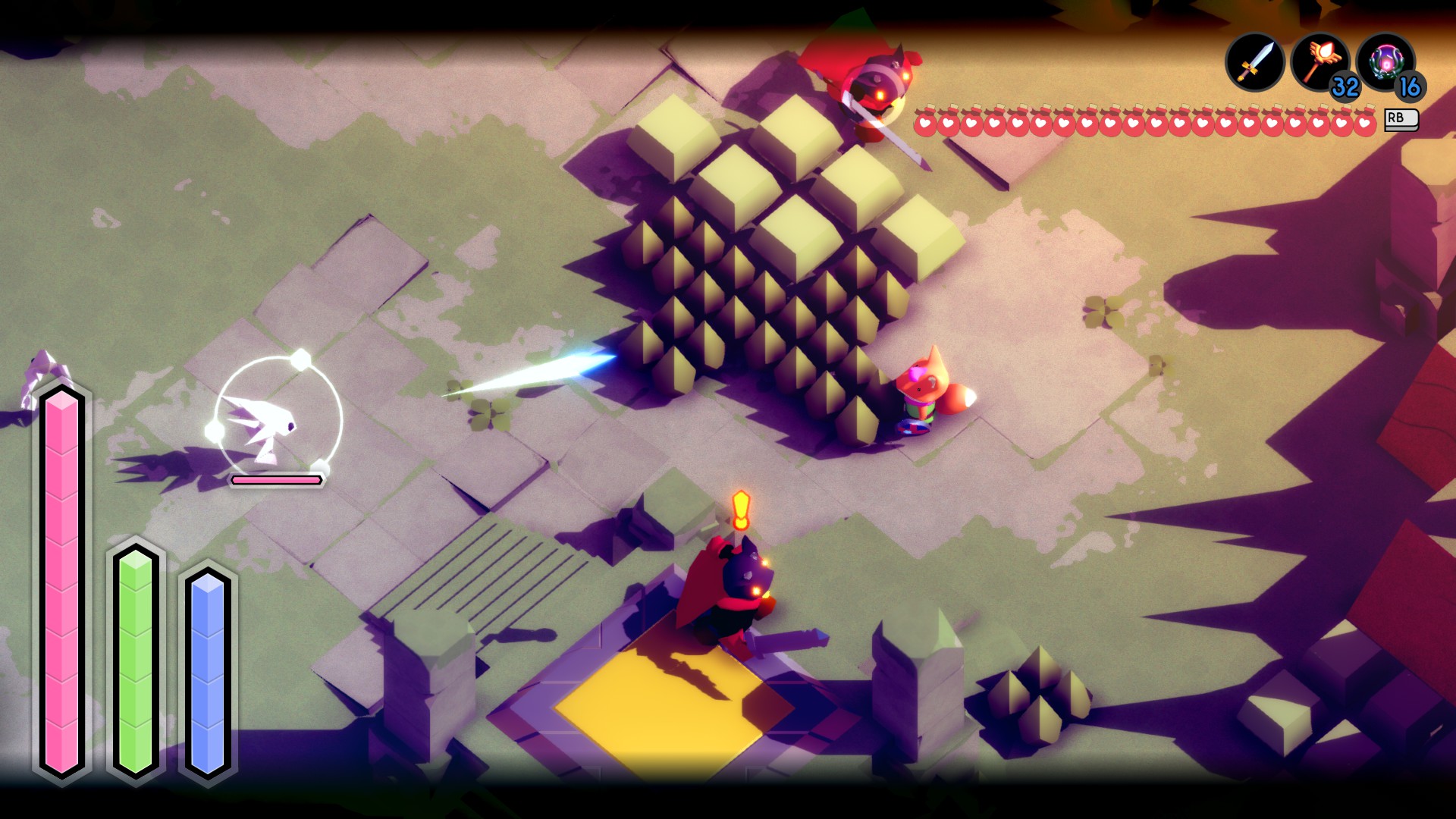
And what a beautiful world it is, with simple but sharp 3D visuals that feel like a modern reimagining of the original Zelda. The graphics are very stylized, with few textures and a lot of exquisite shading and visual effects.
In addition to the gorgeous visuals, the sound design is also amazing: sound effects are all on point, and all the music is very atmospheric and mostly calm, but it doesn’t feel generic at all. Every track is very appropriate for the places they’re used in: a green overworld full of adventure, ancient temples and forests, musty dungeons with animated skeletons. The soundtrack made me feel a sense of longing that I can’t really explain and emotions that I didn’t expect. It really is beautiful.
The main overworld theme. This became one of my favorite game tracks of all time
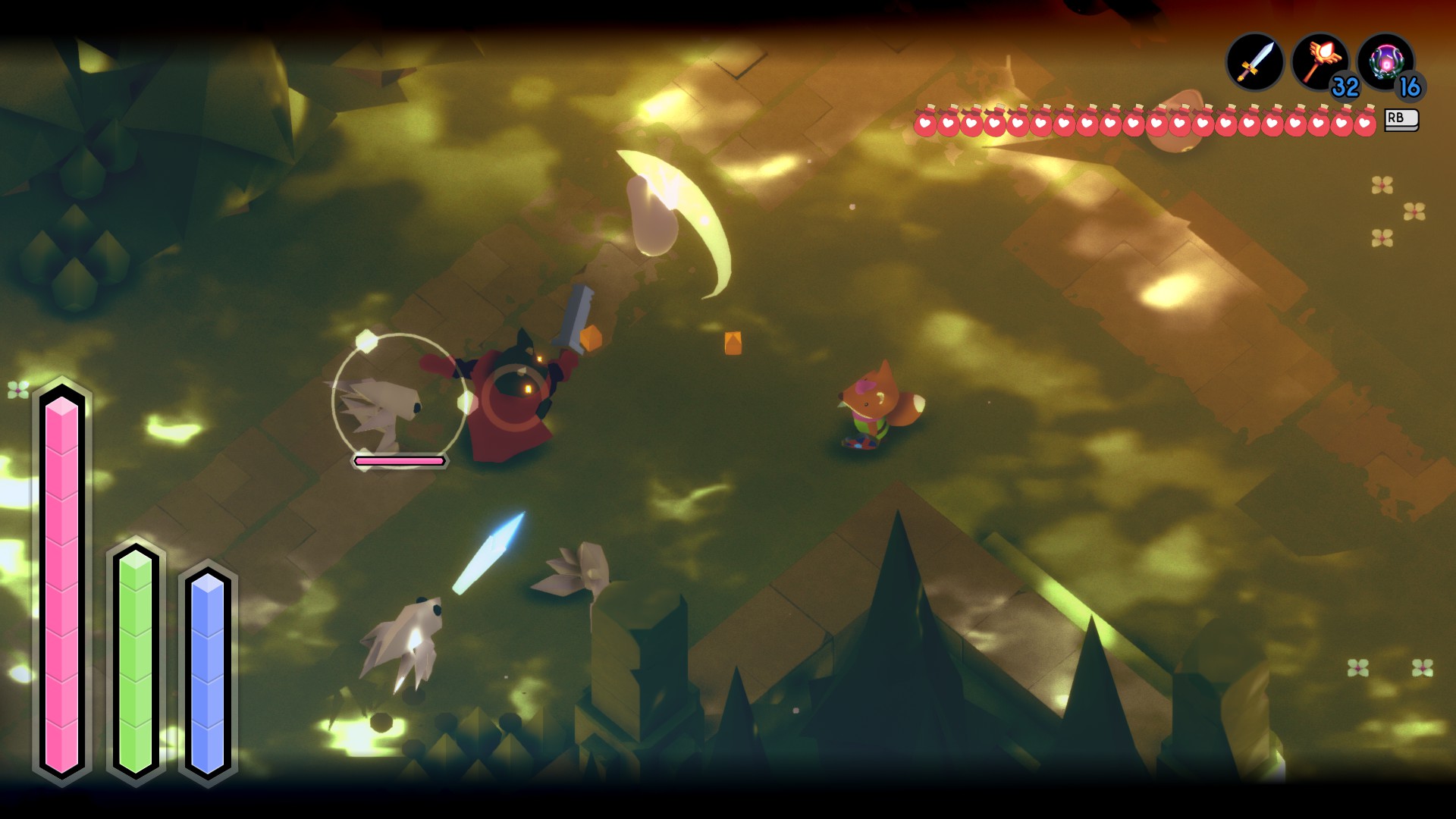
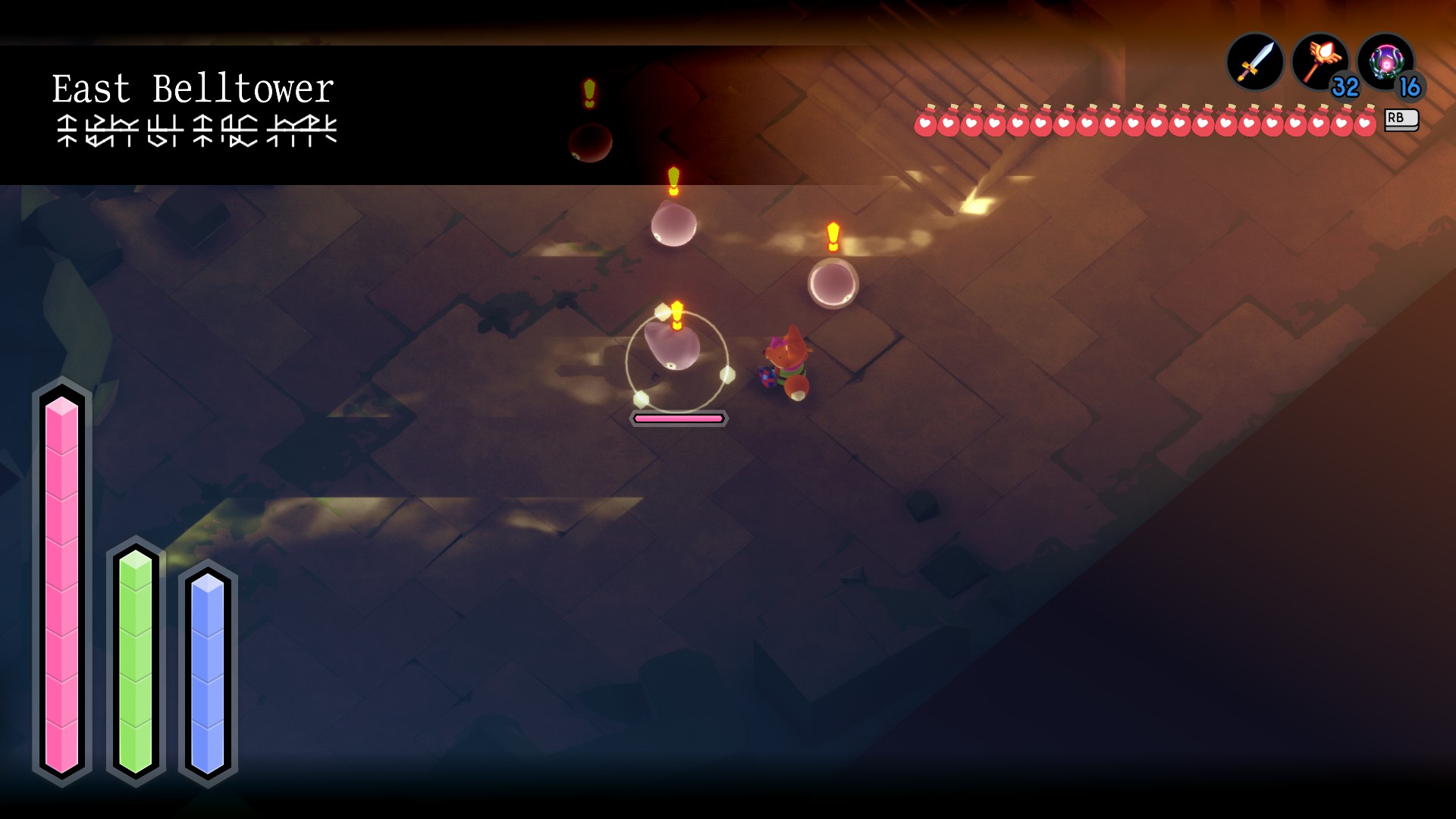
The gameplay is precise and challenging, reminiscent of old-school games: if you’re not careful, even a couple of weak enemies can easily kill you. You have to balance your attacks with your dodges, which consume stamina, to avoid being overwhelmed by your foes. There’s a focus-targeting mechanic that makes the combat work really well. The bosses can be really challenging and I died many, many times to some of them. Thankfully, you only lose a small amount of money when you die and, in Souls fashion, you can get that back if you make it back to where you died.
You find different equipment throughout your journey, but most of it wasn’t particularly useful. That would be one of my minor criticisms of the game: you stick with the same items through most of the journey.
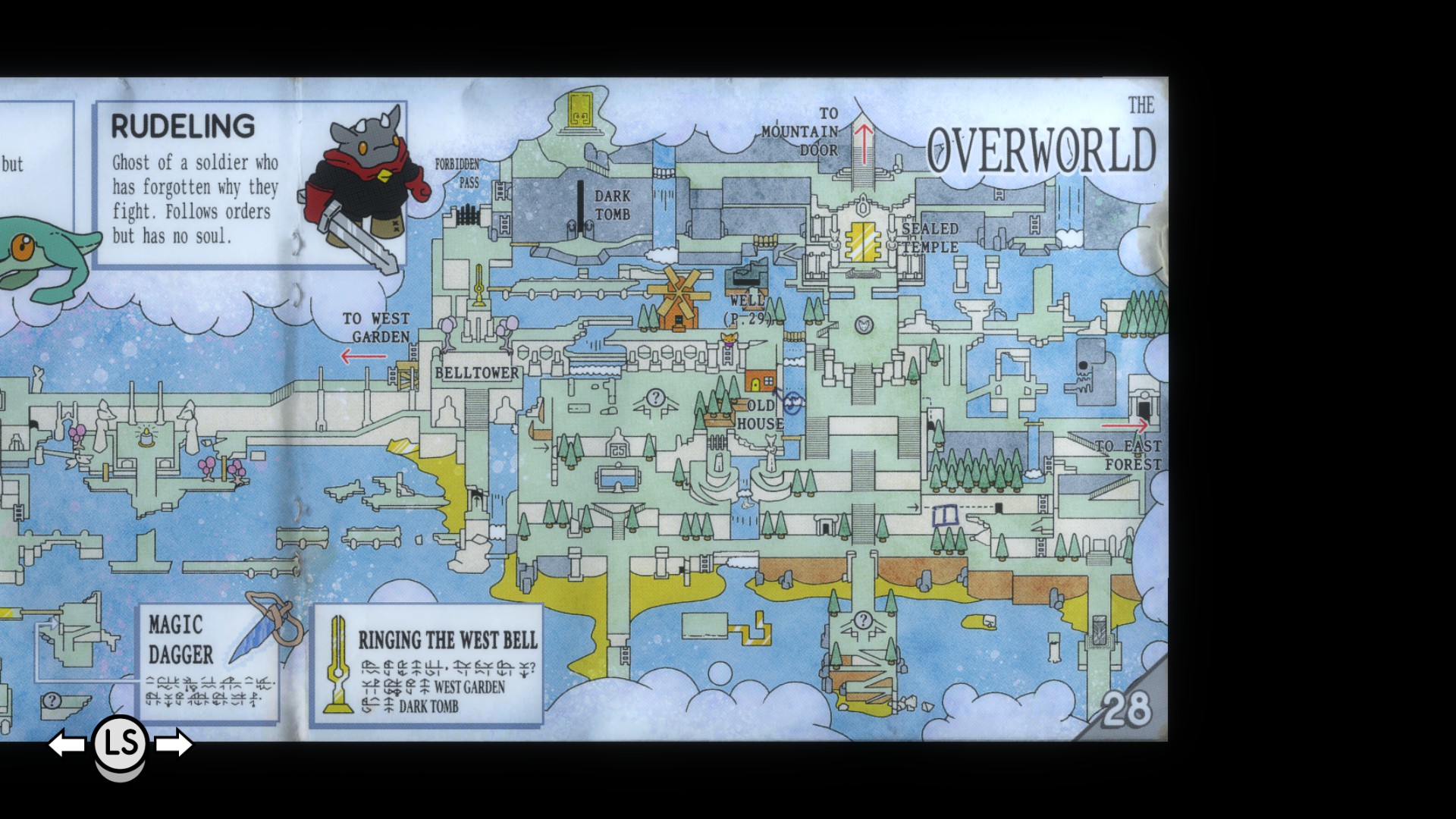
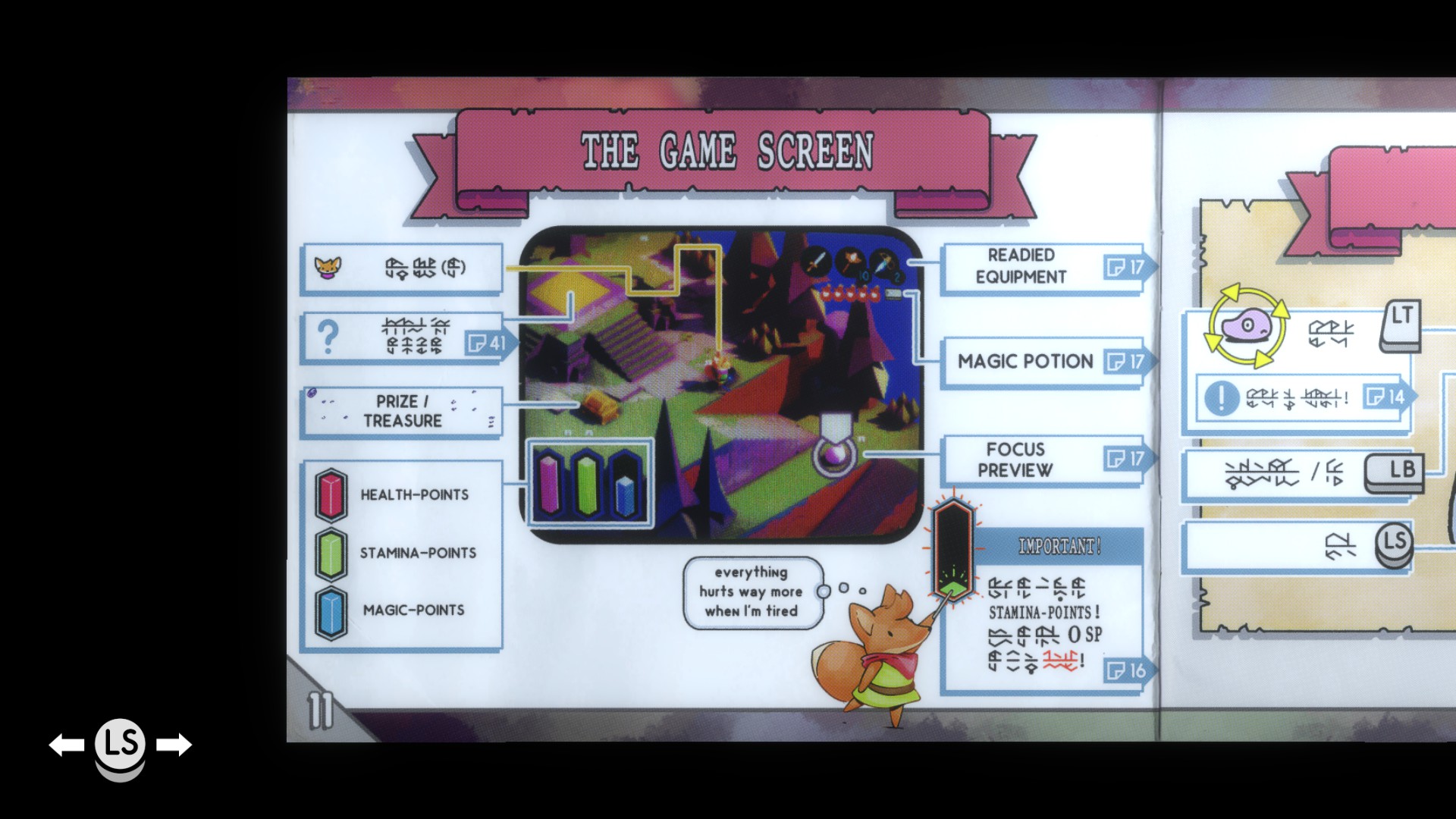
As you go about exploring the world, you come across some UI elements and signs here and there with weird letters that you can’t read. What do they mean? Are they even meant to be read, or are they just gibberish? Thankfully, some English words are used, so you can more or less make sense of things from context. Then you eventually find a page. A page from the game’s manual. And that’s when I realized that this wasn’t simply a game. It was a game about playing a game, and everything that comes with that: the wonderment when you got a new NES game and didn’t read (or even have) the manual, when you were just playing and accidentally discovered a secret, and scribbled it on a piece of paper because you didn’t want to forget it. And, the next day at school, you would share these secrets with your friends who had discovered different things.
Younger gamers might not understand the thrill of discovering game secrets back in the ’90s and 2000s. Why was there a truck parked beside the S.S. Anne? I was convinced Mew was under it. Could you pick up and throw the rocks in Chun-Li’s stage? How do you get that ice key in Banjo-Kazooie? The internet was way smaller back then. It didn’t have all the answers, and few people had access to it. That was the golden age of game rumors and they really spread in the schoolyards.
But back to the game. As you progress through your journey, you find more and more pages of the manual, and you realize that all along you could always perform actions that you didn’t know you could - you just didn’t have the manual to explain how. And then you progress some more, and you might even start understanding some of the weird words and scripts that are all over the game.
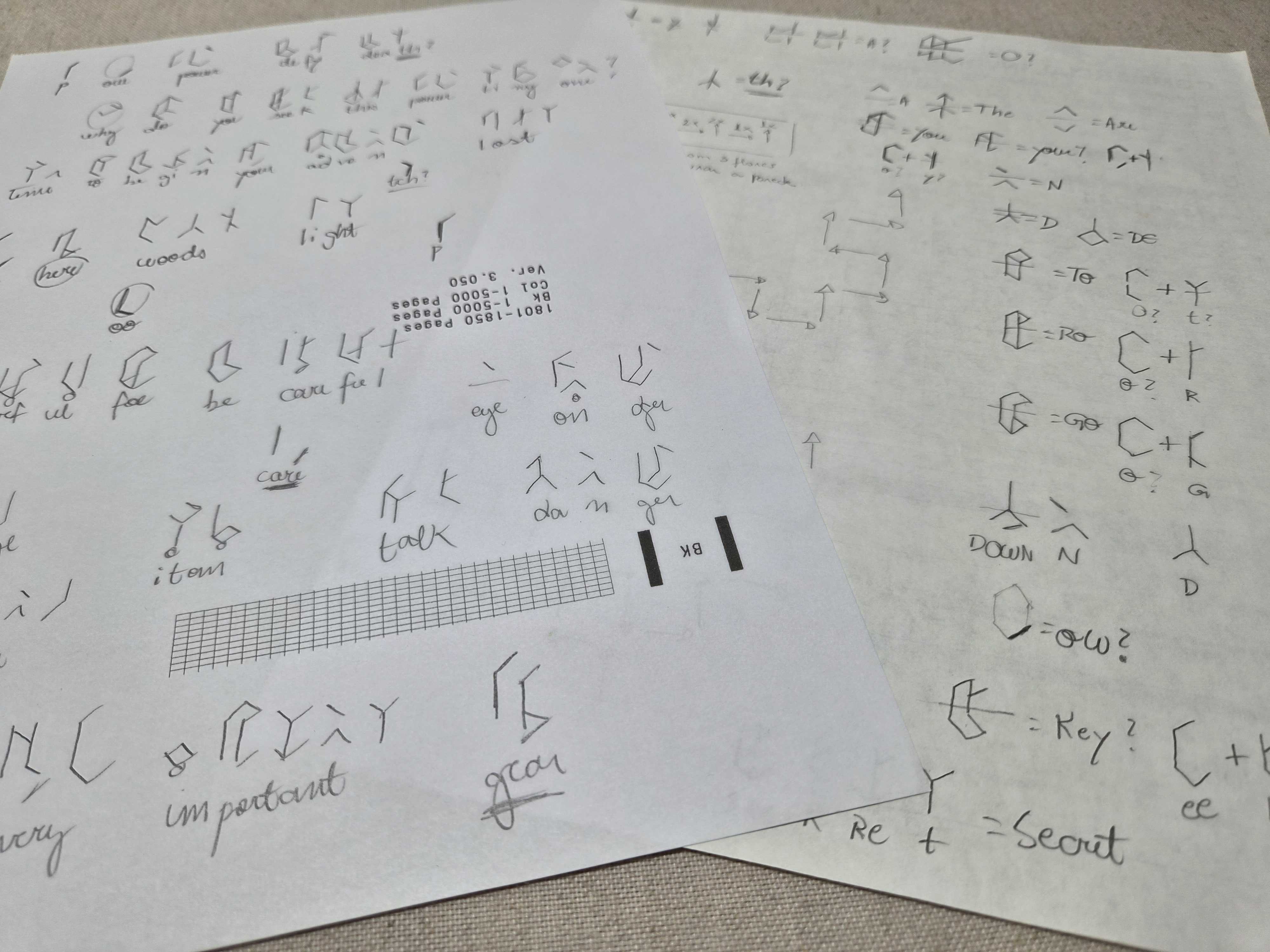
You can play and finish the game without learning the weird language. But to reach the best ending, you’ll need to grab a pencil and some paper and take notes. It’ll be hard to open the Door in the Mountain without them. I know I sound old and annoying, but younger players don’t know what it’s like to chart a map on paper (ugh Phantasy Star memories) or scribbling passwords and tips in a notebook. Tunic asks for the same kind of dedication. Making a modern game like this was a bold move, and I love it.
Of course, you can look everything up on the internet if you want, but in my humble opinion, that completely defeats the point. The feelings of discovery and accomplishment are what make Tunic so great.
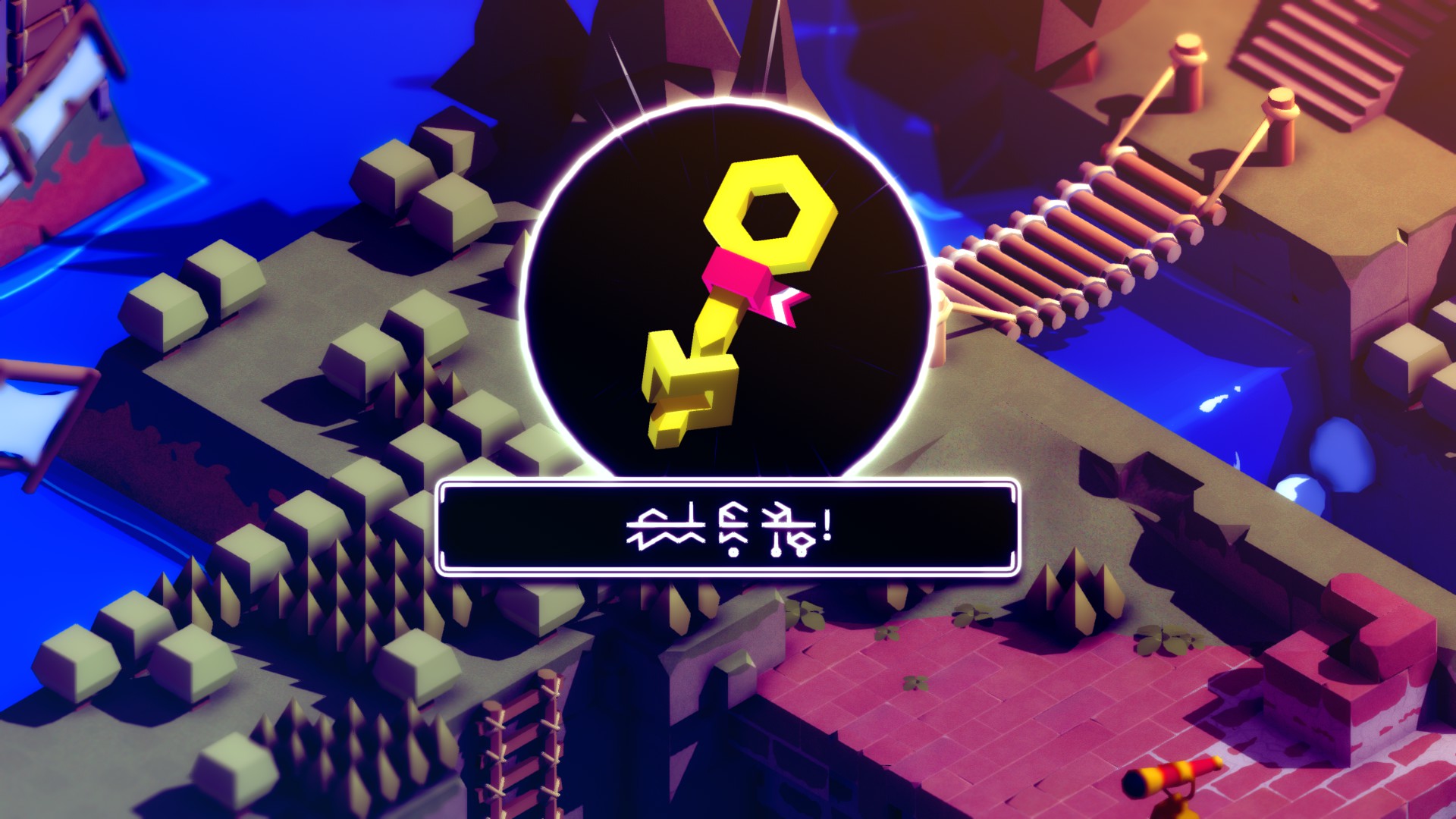
And every discovery feels fair. Despite the nostalgic appeal, this is a modern game, so none of the secrets feel too obtuse or cheap. If you spend enough time mulling over a mystery, you’ll eventually figure it out (except for the very, very last puzzles, but that’s okay).
I played Tunic with my wife and it was so fun discovering secrets and discussing its mysteries together. Playing alone is all good, but having someone to bounce ideas and theories off was so much fun.
Tunic is a 10/10 for me. It rewards exploration, patience, and thinking. It has challenging gameplay and clever secrets. It’s wrapped in gorgeous visuals, music and nostalgia, but transcends its inspirations to become a modern masterpiece.
Details
- Name: TUNIC
- Genre: Action/Puzzle adventure
- Developers: Isometricorp Games
- Year: 2022
- Available on Steam ⤴, Nintendo Switch, Playstation 4 and 5, Xbox One and Series X/S
Extra screenshots
|
|
|
|---|---|---|
|
|
|
Post revised with ChatGPT