Have you played...? A Soace for the Unbound
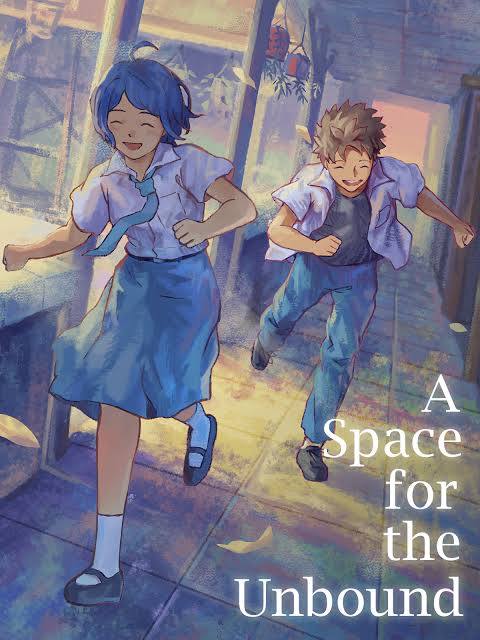
A Space for the Unbound is a 2D adventure game developed by Indonesian studio Mojiken and released in 2023. It’s poignant and beautiful, both aesthetically and in writing. Be aware that it delves into emotionally sensitive topics like trauma and depression, not unlike another famous game that I really liked.
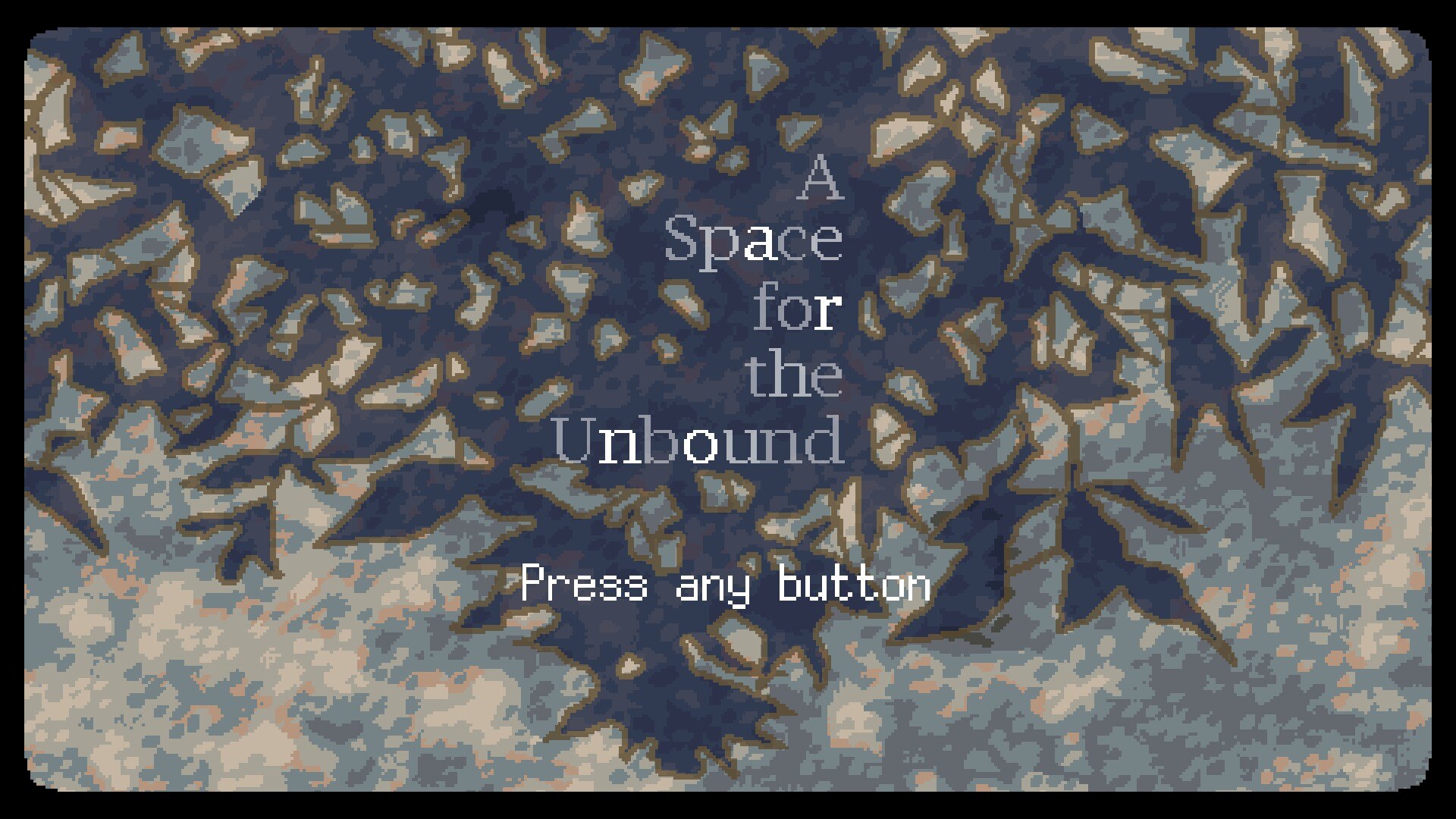
In this game, we control Atma, a high school student, as he lives through everyday life with his classmate and girlfriend, Raya. One day, instead of filling their future career form, they decide to write a bucket list of things they want to do and skip school to start doing these things. Everything seems like a typical cute high school romance story. However, things start getting weird when Raya reveals that she has a power that lets her alter reality at will.
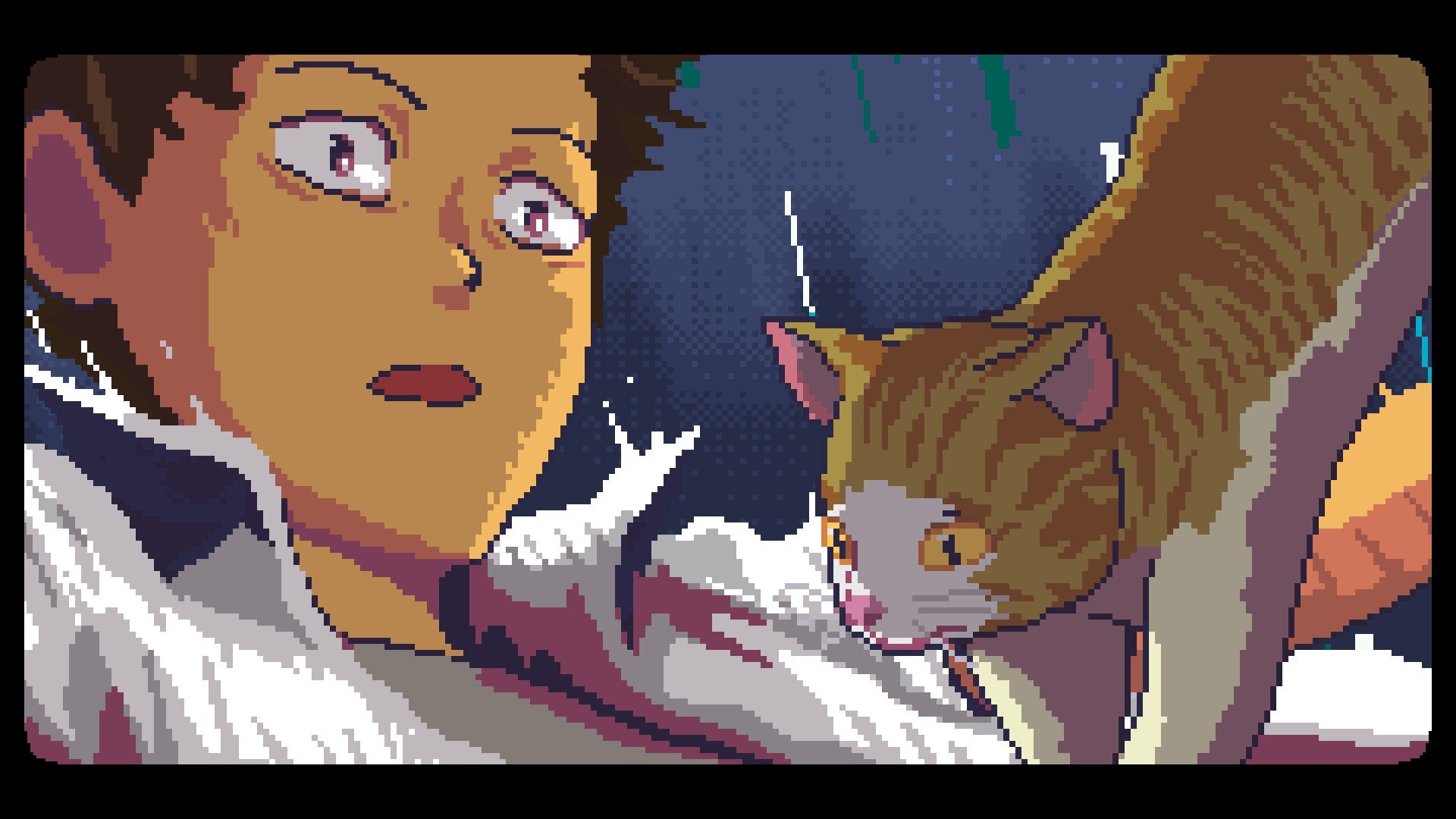
For instance, they go to the cinema, but Atma doesn’t have enough money for two tickets, so Raya makes money appear in his pocket. After that, she transports them to “cat wonderland”, a haven for cats where you can pet them all you want (i’m a cat lover so I appreciated how many cats are in this game). But then something goes wrong and the cinema employees start acting like cats and thrashing the place. Things only get more and more out of hand after that. Why are these weird, unsettling events happening, and why does Raya have the power to change reality?
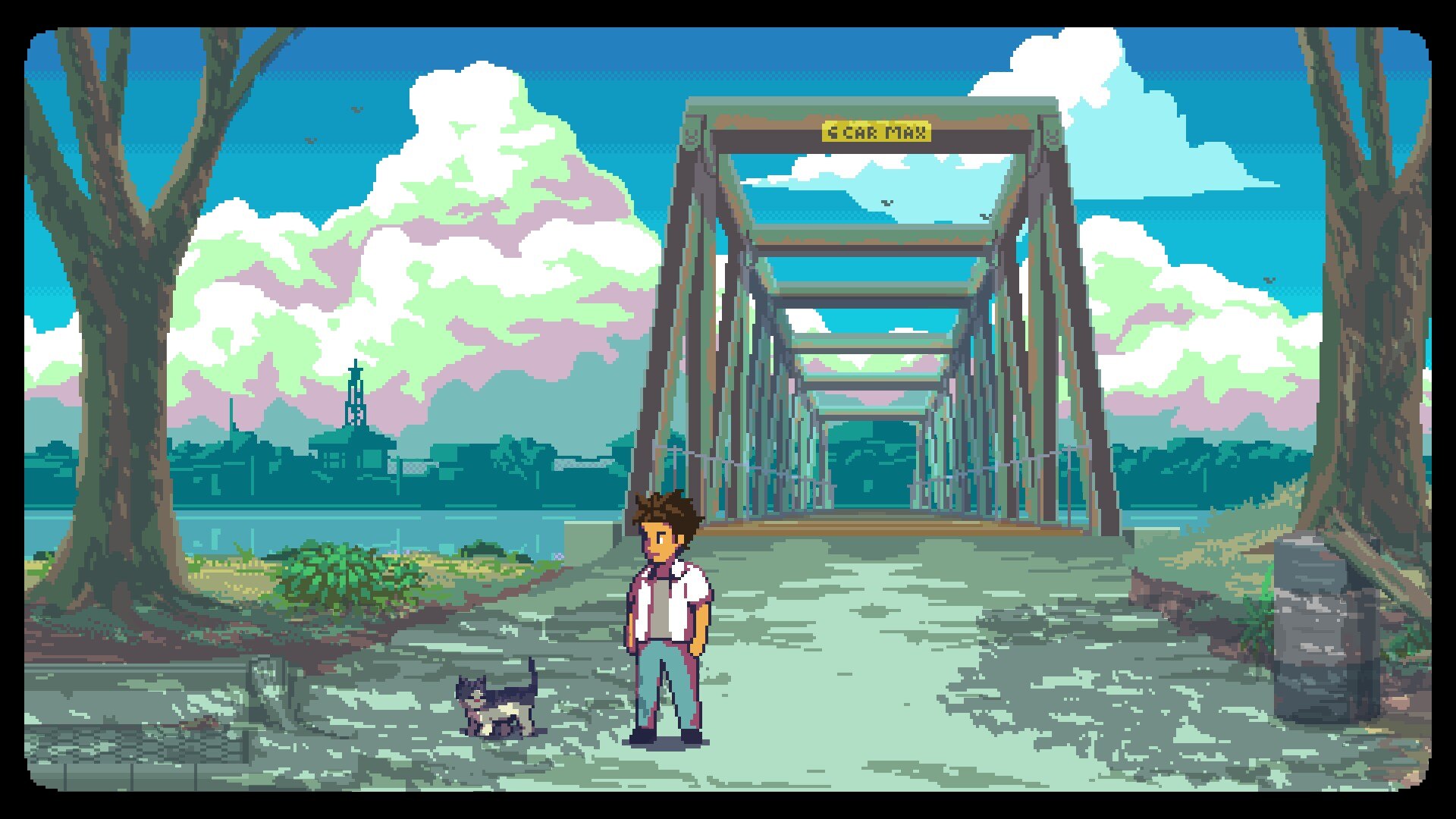
Gameplay-wise, this is a classic adventure game, where you mainly walk around, talk to people, collect items and use those items in different places with different people. There are a lot of fetch quests where you have to do quite a bit of back-and-forth, which can feel a bit like a slog and don’t add much to the story. This is one of the few negatives of the game, in my opinion.
What makes things more interesting is that Atma has a “spacedive” ability, which lets him enter people’s hearts and help them with their personal dilemmas. This is one of the game’s core mechanics and provides a lot of insight into the characters’ personalities and backstories. It’s also used to obtain items and solve puzzles.
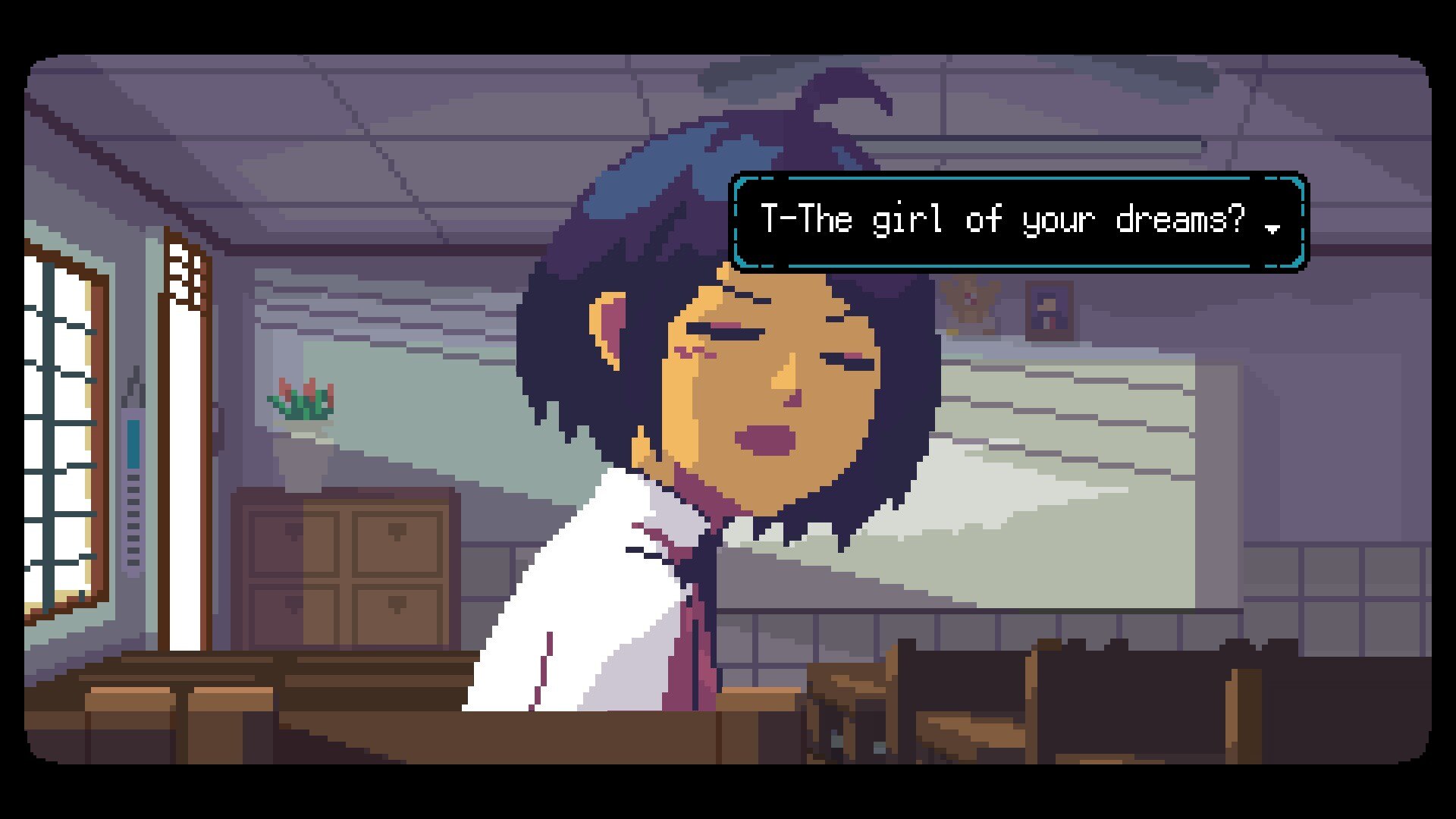
There are some combat sequences here and there that play like quick-time events, and I’ve read that some people find them a little hard and detached from the rest of the game. I didn’t think they were too bad, and I felt they were a nice change of pace from the regular adventure gameplay.
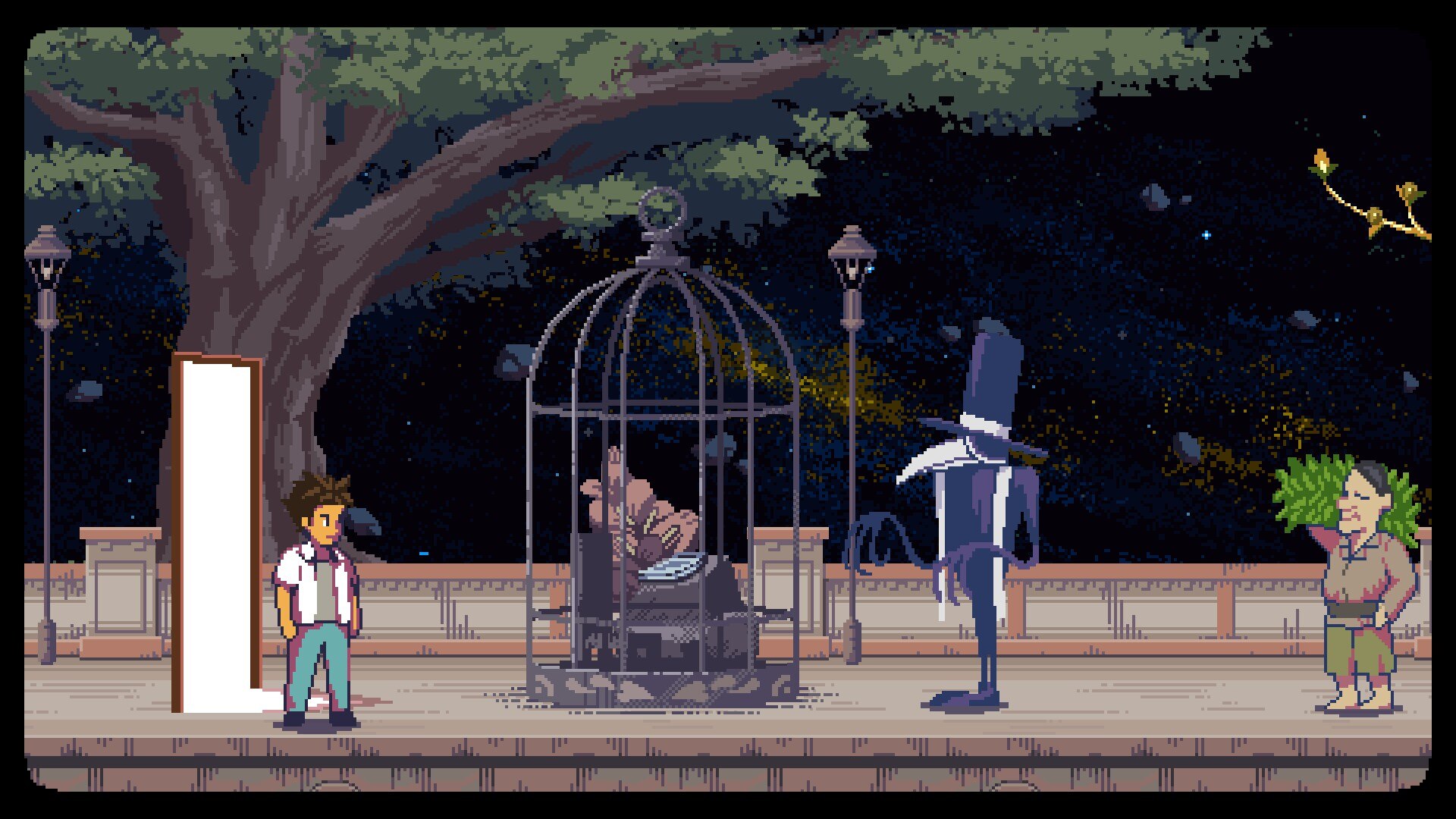
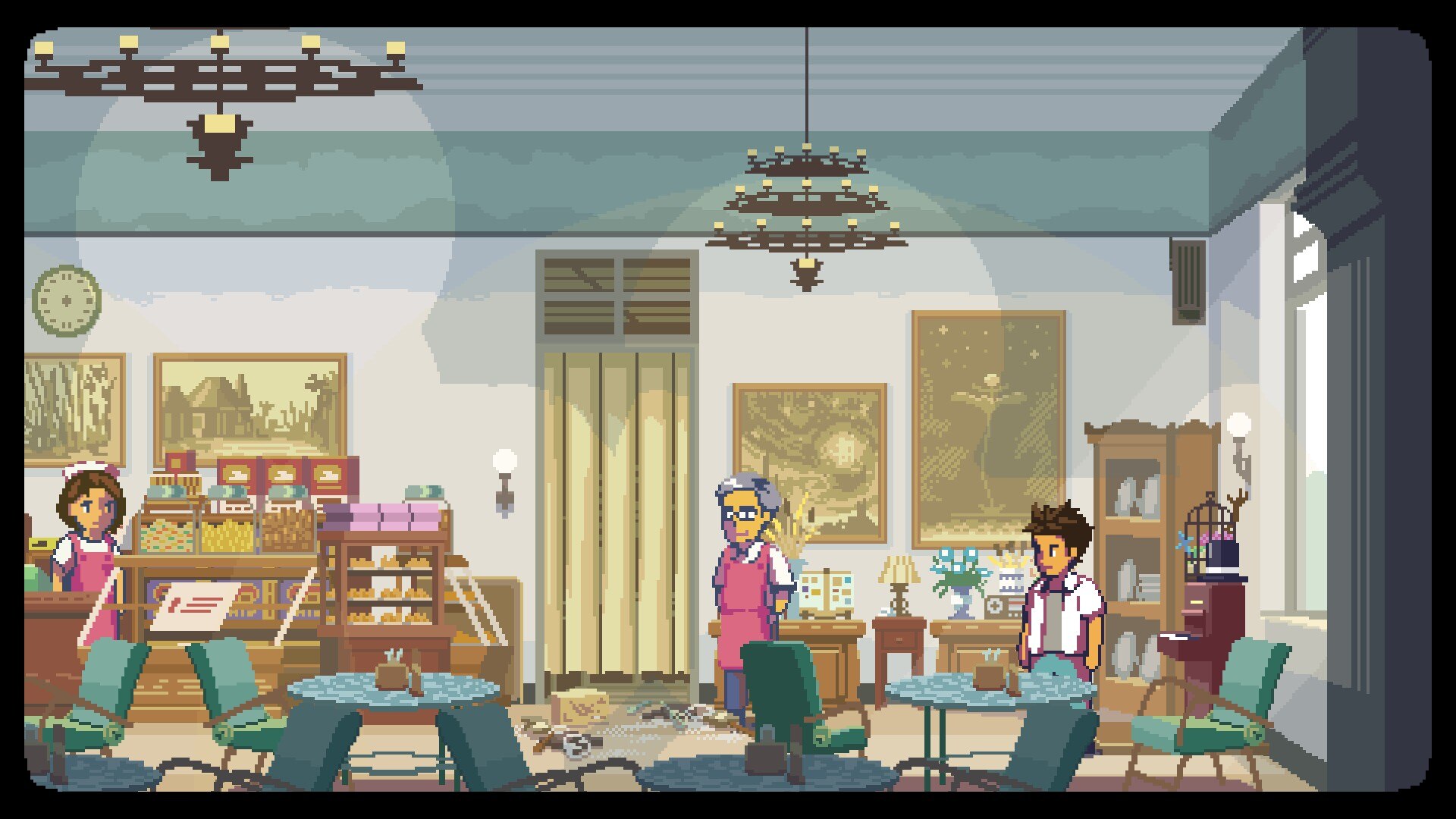
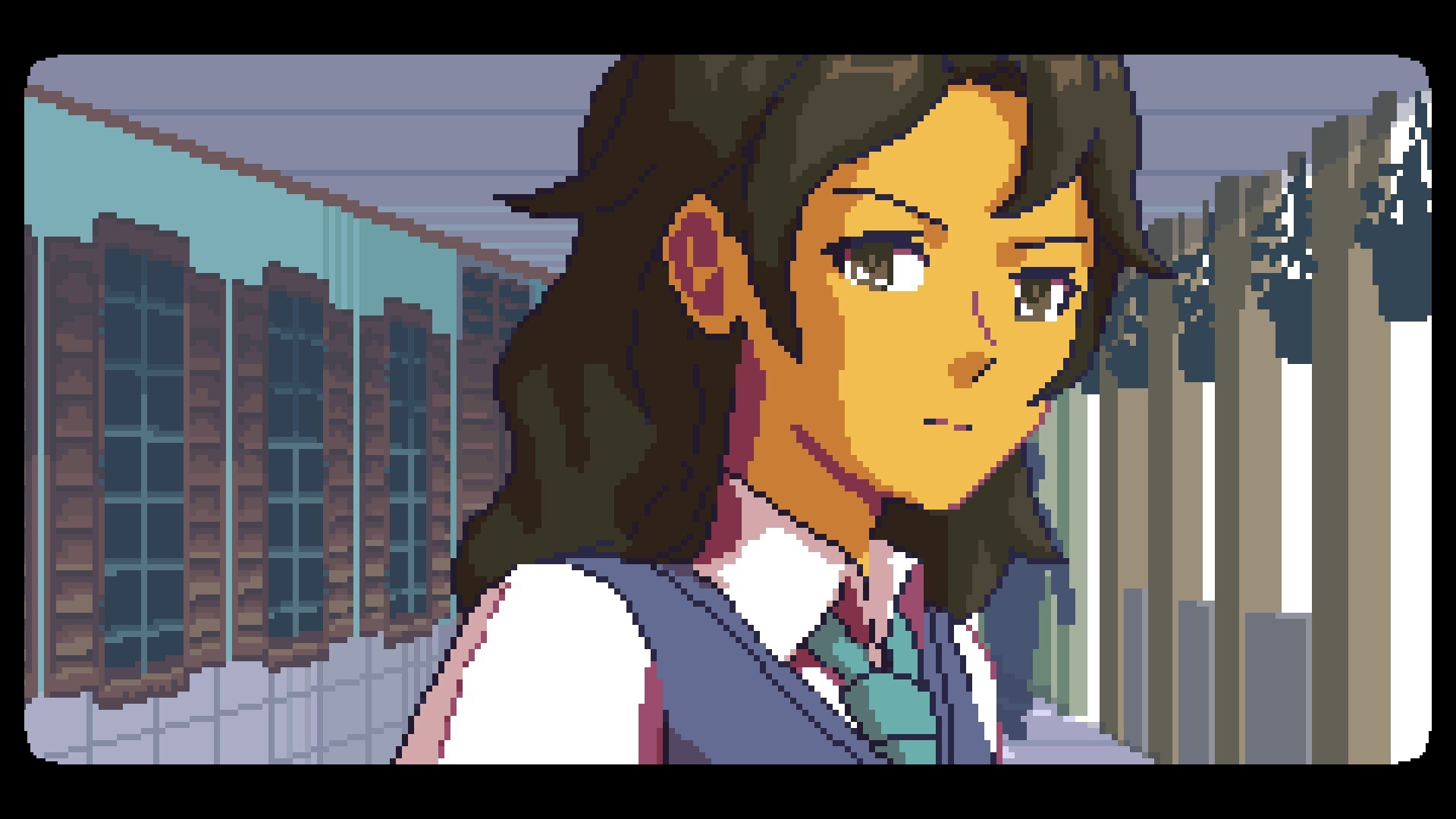
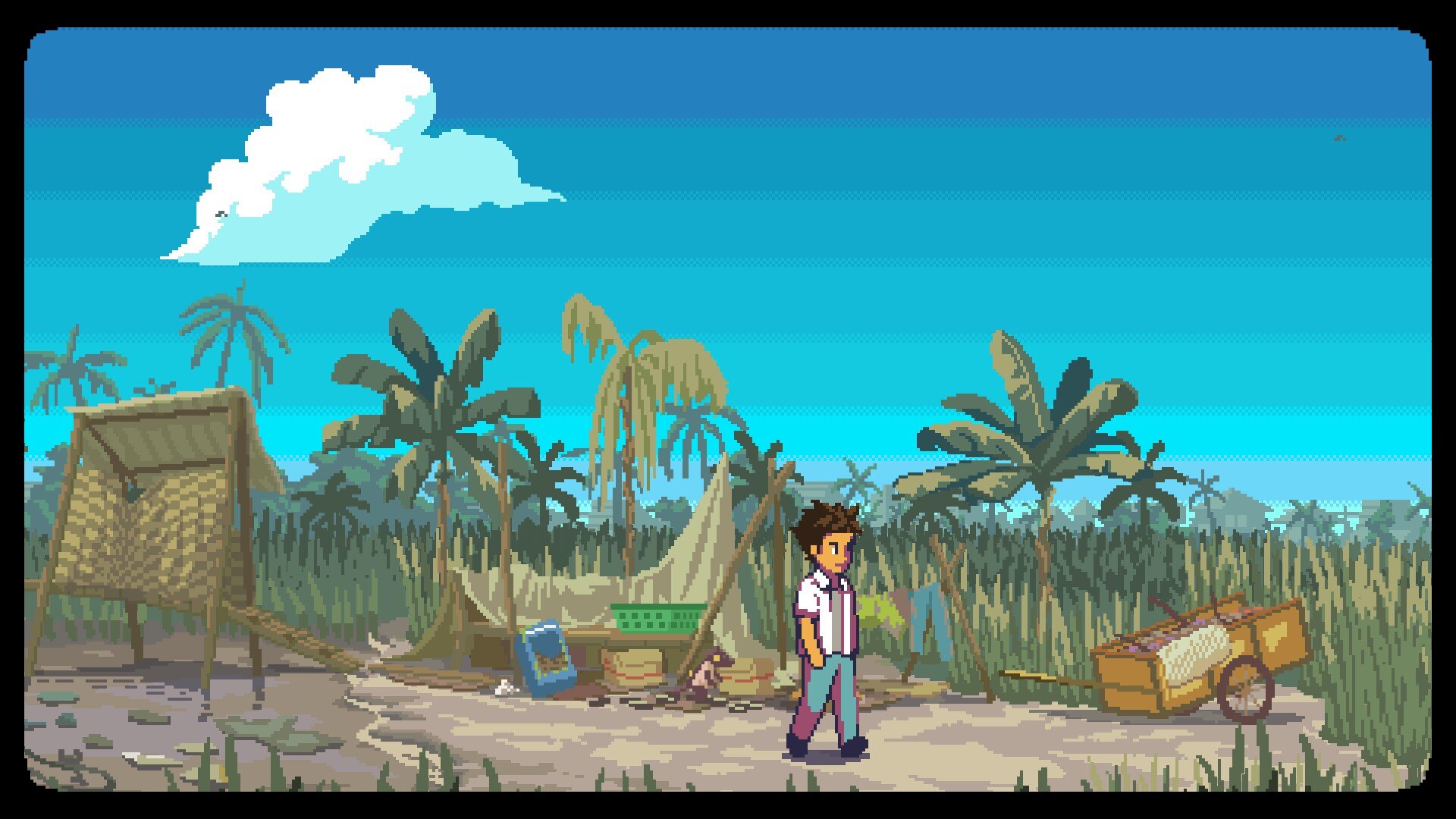
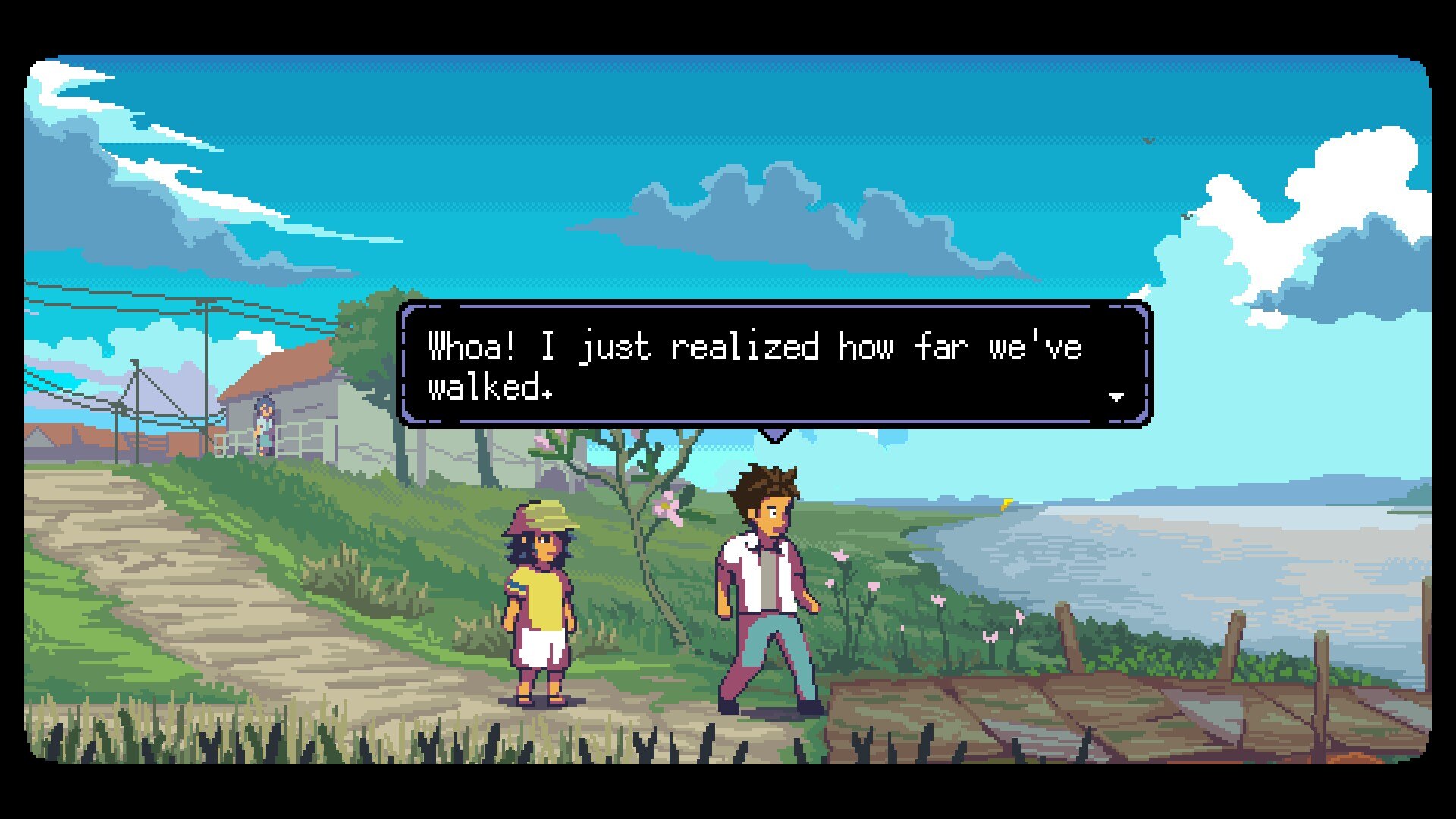
The music is beautiful yet subdued, though I don’t think it was particularly memorable, with some exceptions. It does a great job of enhancing the emotions in many of the scenes and pivotal moments. The graphics are very beautiful, with a 2D 16-bit pixel art anime style, and all the environments and scenarios look amazing. The cutscenes are beautifully done, resembling scenes from an anime. I wasn’t too fond of the character sprites at first, but they’re all very readable and well-made, with a great deal of animation.
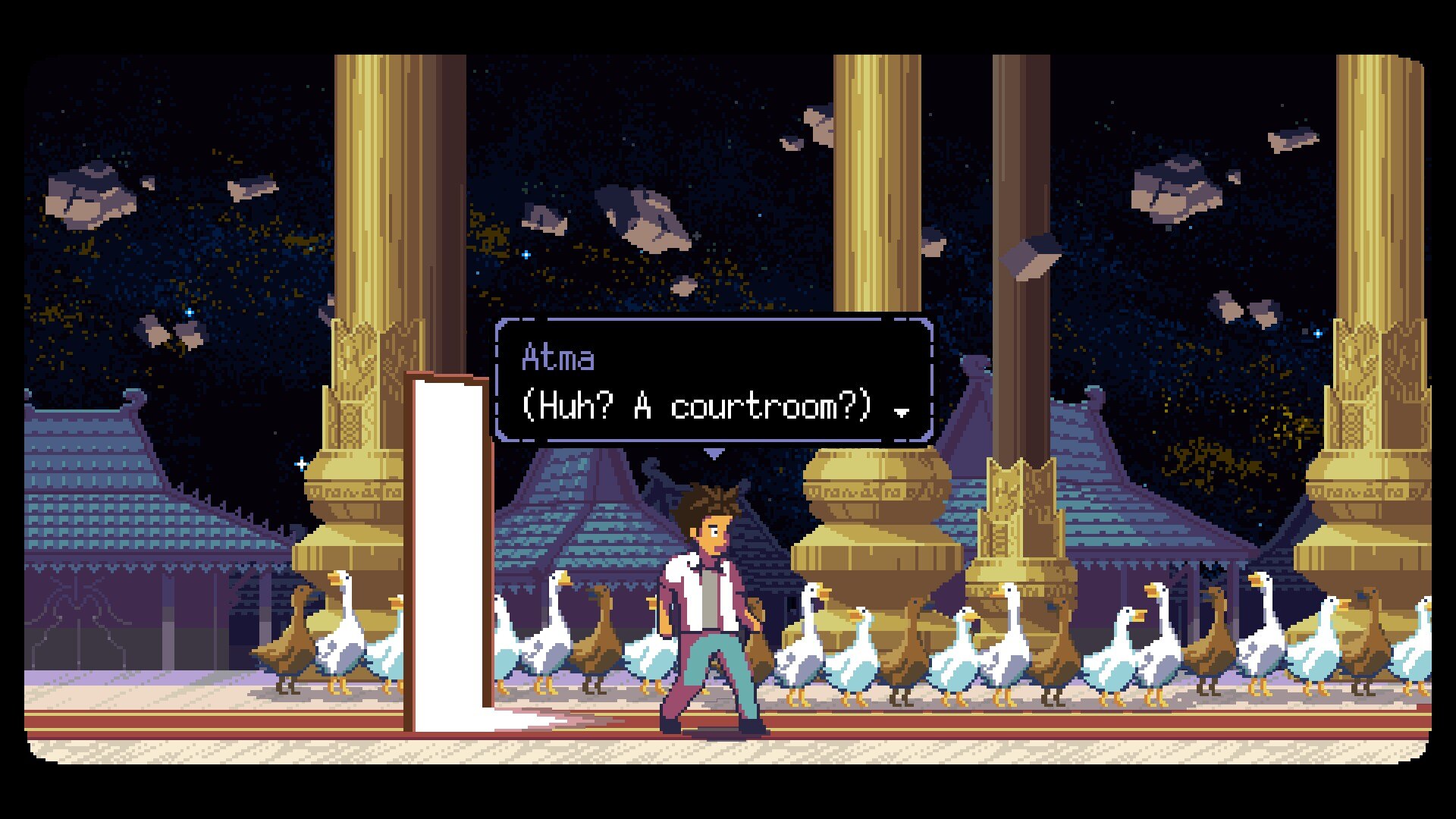
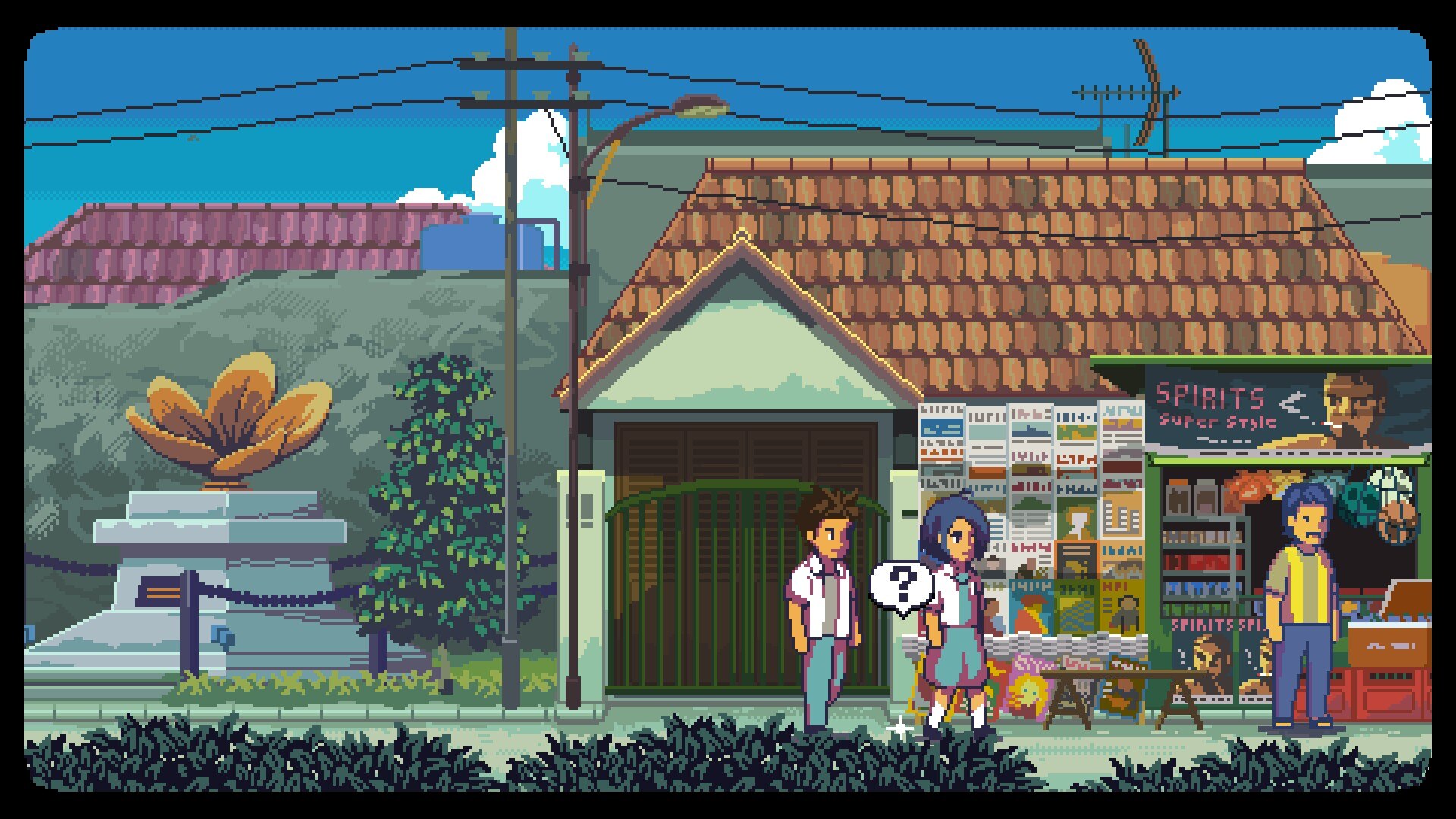
Another aspect I loved about A Space for the Unbound is its setting. The game takes place in a small Indonesian town in the late 90s/early 2000s, which reflects Mojiken Studio’s roots. I love when games (and any other media, for that matter) showcase and incorporate their creators’ culture, especially when they’re from an underrepresented place like Indonesia. I think it helps shorten the distance between different countries and cultures, makes the work feel authentic and unique, and also gives it a ton of personality and charm.
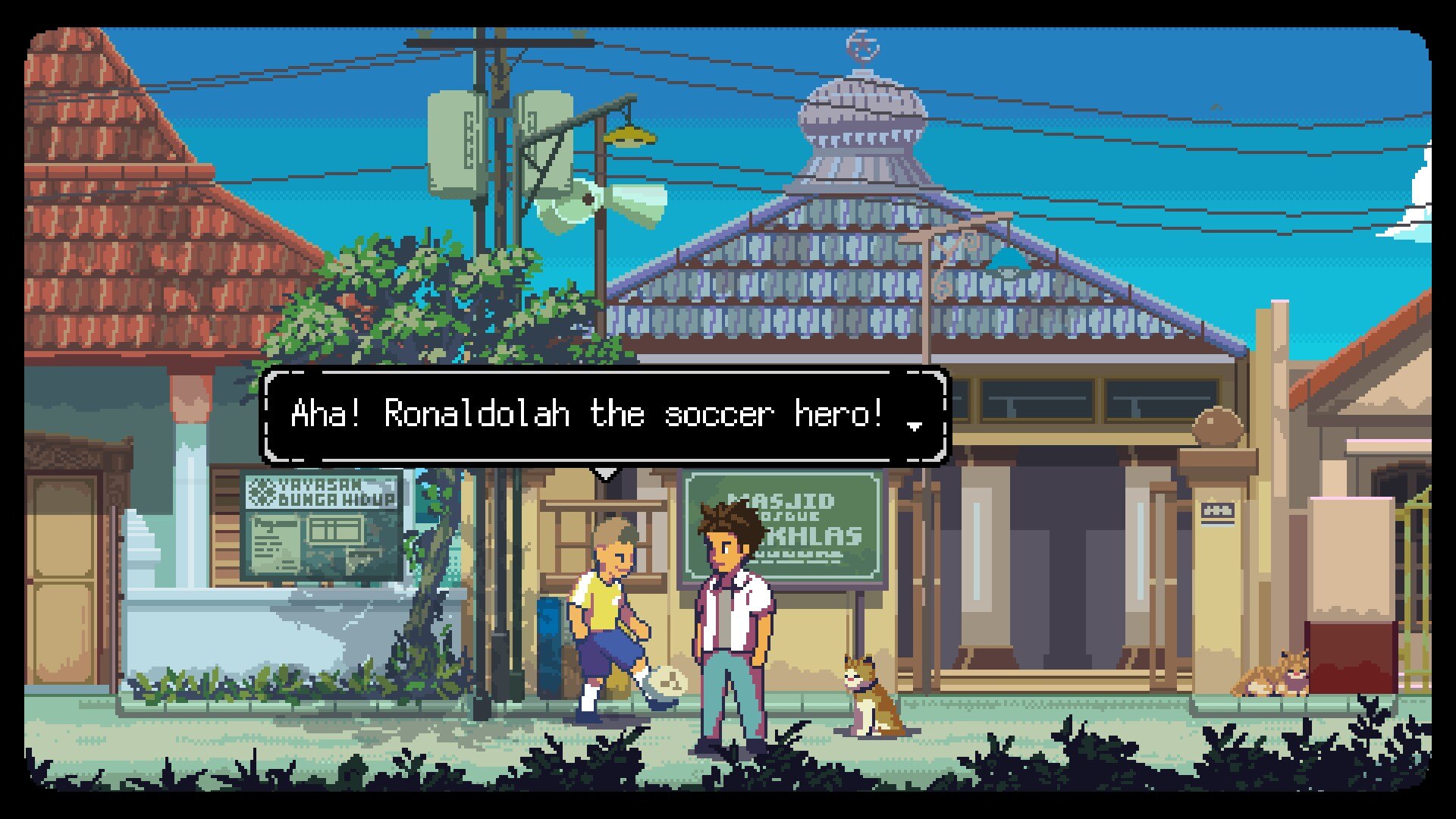
It’s also an immersive way for someone like me, who has lived their entire life in Brazil, can understand a little more about a country and people who are so far away from me. From what I gathered from the game, Indonesians seem to be quite into soccer, much like us, and there’s even a Ronaldo ⤴ look-alike character, which I found funny and amazing. I felt genuinely curious about Indonesian culture after playing this.
There are also references to Street Fighter II and the Ace Attorney series which were fun to see.
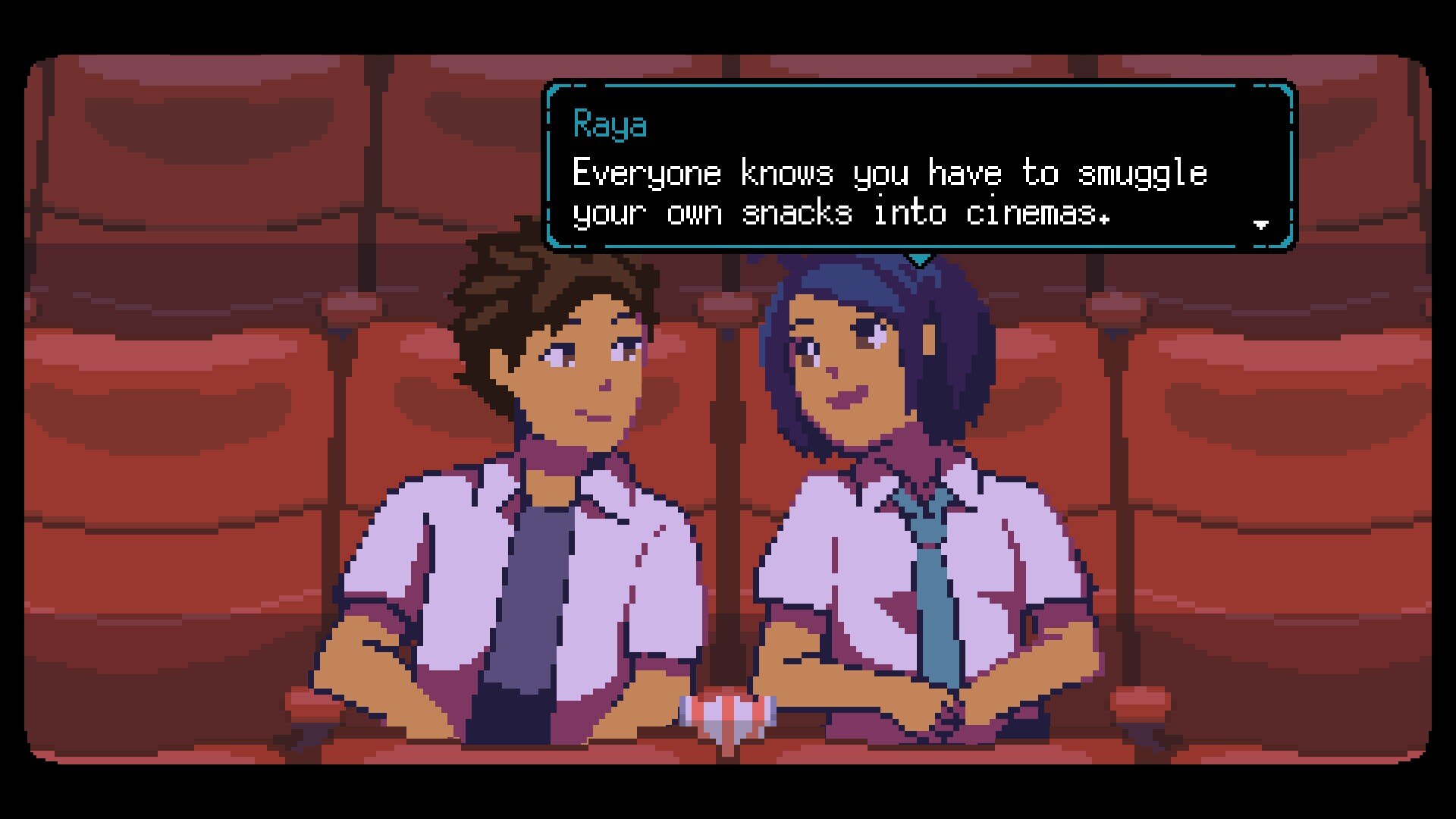
But undoubtedly, where A Space for the Unbound shines brightest is in its writing and characters. I don’t want to say too much here to avoid spoilers, but I’ll try to explain why I loved it. The way the story is told and how we slowly unravel the truth of what’s happening is masterfully done. I like how everything is confusing at the beginning, but as you gather small clues and story fragments, you gradually begin to understand what’s really going on. The characters are well-written and feel deeply human, and the game does a great job showing how everyone has both qualities and flaws.
I also love how the game doesn’t underestimate players’ intelligence by over-explaining everything: instead, it leaves space for ambiguity and discussion around some important points. I’ve included some reflections on those in a separate section at the end of this post for those who have already played the game.
Additionally, the way trauma and depression are depicted, and how different people cope with them, was very tactful and tasteful. I cried hard at some points in the story.
A Space for the Unbound is a great game with a heartfelt story that made me reflect for a long time after I finished it. I give it a 9/10. The fetch quests can be a bit of a chore, but they don’t take away too much from all the other great aspects of the game. If you enjoy emotional narrative-driven games, I’m sure you’ll like this one.
Details:
- Name: A Space for the Unbound
- Genre: 2D naarrative adventure
- Developers: Mojiken Studio ⤴
- Year: 2023
- Available on Steam ⤴, Nintendo Switch, Playstation 4 and 5, Xbox One and Xbox Series X/S
Extra screenshots
|
|
|
|---|---|---|
|
|
|
Spoiler territory and post-game discussion
Please don’t read beyond this point if you haven’t finished the game! Below are spoilers, along with discussions of my interpretation of some story points.
I believe Atma never truly existed outside of Nirmala’s mind. He was unconsciously created by her during her difficult childhood, while she was struggling with family and school issues, as a way to help her cope with her circumstances. Atma acted as her guide and mentor, someone she could confide in and who helped her with her writing.
Here’s a table of facts I compiled while trying to understand whether or not he actually existed:
| Atma existed | Atma did not exist |
|---|---|
| Nirmala asks about Atma after the drowning incident | No one knows Atma and his body was never found |
| Raya leaves flowers for Atma in the complete ending | Marin investigated and found nothing about Atma |
| Nirmala becomes very defensive when questioned about Atma - if he were real, why would she react that way? | |
| It’s strange that a high schooler would befriend an elementary school kid like Nirmala. Even Atma remarks on this in one scene | |
| Atma means “soul” or “essence” in Sanskrit, which fits if he embodies the part of Raya that wants to heal | |
| Atma’s backstory is very vague. Why would a high schooler run away from his hometown to pursue a dream of becoming a writer? | |
| There are some dialogues that reference false memory syndrome, an alleged condition where people develop false memories about past events | |
| This is debatable, but I think Atma resembles Eric a little (mainly the spiky hair). In one memory, we see that Nirmala drew Eric, which could suggest some kind of childhood crush. In my interpretation, it makes sense that Atma would be “modeled” after someone she was attracted to at some point. |
I interpreted the drowning incident we see from Atma’s perspective as actually being from Nirmala’s perspective. Her asking for Atma afterward might reflect her distress at the time, as well as the moment Atma died in her mind.
In the final ending scene Nirmala leaves flowers for Atma by the river because, to her, he truly existed. He helped her while she was struggling during childhood, and he helped her again while she was in a coma during the events of the main game, guiding her through her traumas. I don’t think the ending implies that he literally existed in reality, but for Nirmala, he was undeniably real.
These are my thoughts. Let me know in the comments whether you agree or disagree!
Post revised with ChatGPT